
Affiliate Disclaimer:
Some of the links on this page are affiliate links, meaning if you click through and make a purchase, we may earn a small commission at no additional cost to you. We only recommend products and services that we believe will add value to our audience. Your support helps us continue to create content and provide helpful information. Thank you!
By Deb Simpson, NASM Certified Personal Trainer — Deb coaches women over 40 who are building strength from the ground up.
- Why Plyo Boxes Feel More Intimidating Than They Are
- What Height Plyo Box Should Beginners Start With?
- The Best Plyo Boxes for Beginners: 4 Picks
- Choose the Box That Fits Where You Are Right Now
- Frequently Asked Questions
Why Plyo Boxes Feel More Intimidating Than They Are
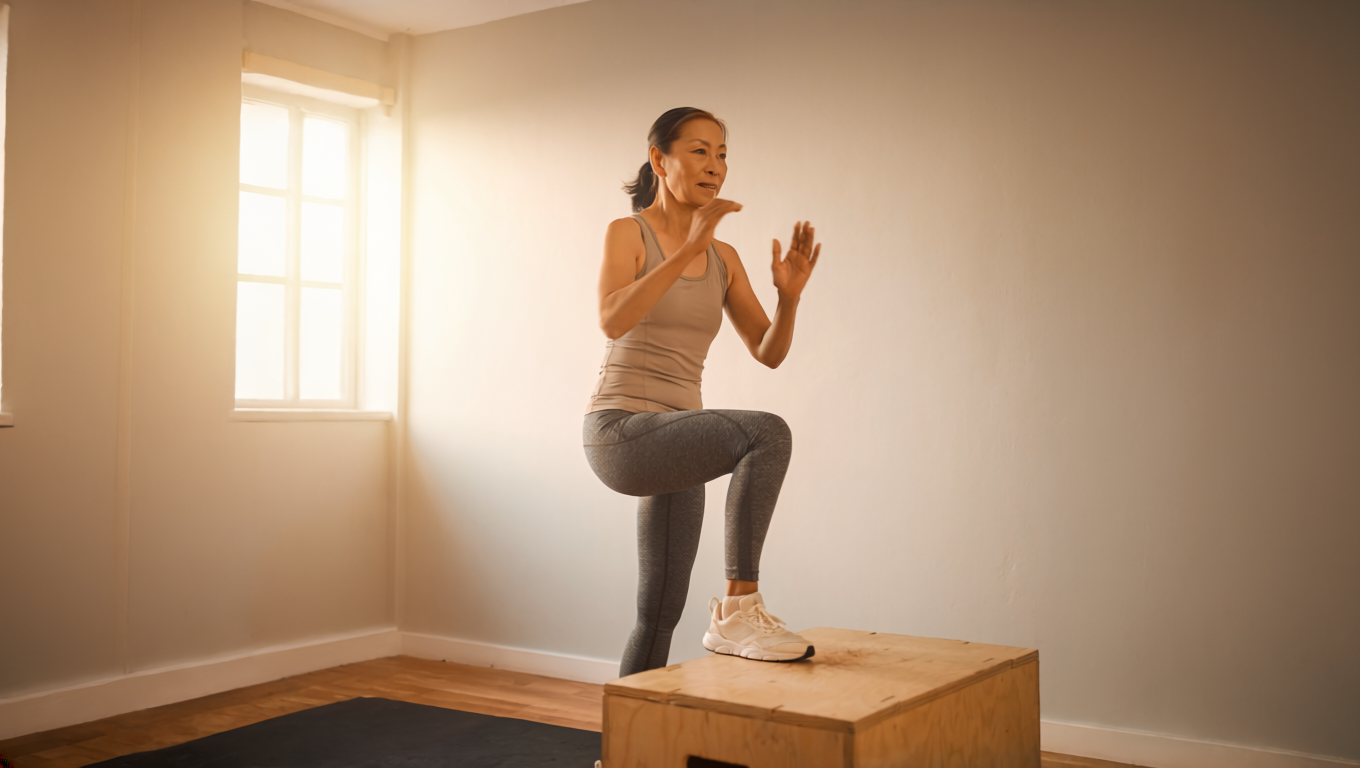
If you searched “step up box” and landed here, you’re in exactly the right place — step-up box and plyo box are the same piece of equipment. A plyo box is a sturdy, elevated platform used for step-ups, step-downs, push-up variations, lateral drills, and yes, box jumps once you’re ready for them. The intimidating name is the biggest barrier to entry. The equipment is about as complicated as a step stool.
Most women over 40 who come to this category assume plyometric training means jumping — and they assume jumping means injury risk. What they’re missing is that plyo work starts at the floor. You don’t clear 24 inches on your first session. You pick a height that challenges your glutes, your quads, and your hip flexors without putting your knees or your confidence at risk. You build from there.
All four picks in this guide were chosen for appropriate height ranges, solid construction, and real beginner usability. They also pair naturally with stability trainers — plyo boxes and balance training target the same movement foundations, and they complement each other well in a home gym setup.
Not sure where plyo fits in your plan? That’s what I work through with clients at Featherweight Fitness — women over 40 who want to build strength without guessing.
What Height Plyo Box Should Beginners Start With?
The most common beginner mistake is buying too tall. A 24-inch box looks achievable on a product page and feels very different under your feet when you’re standing in front of it. The products in this guide span 4 inches to 30 inches — here’s how to figure out where to start.
Your own height matters as much as your fitness level. Taller people have more clearance relative to box height, which means what’s a standard training challenge for someone 5’8″ is a completely different ask at 5’2″. For example, take me at 5’2″ — a 24-inch box is a real challenge even when I’m at my fittest. If you’re on the shorter side, err toward the lower end of any range below and give yourself more time at each height before moving up.
- Never done step training: 4″–8″ — build the movement pattern before you add height
- Some fitness background, comfortable stepping: 12″
- A few months of consistent lower-body training: 16″–18″
- Solid strength base, training for power: 20″–30″
The Best Plyo Boxes for Beginners: 4 Picks
| Product | Where to Buy | Heights | Weight Capacity |
|---|---|---|---|
| Stooder Foldable Step Platform | Check Price | 4″, 5.5″, 7.5″ | 300 lbs |
| Caelum 3-in-1 Wood Plyo Box | Check Price | 12″, 13″, 16″ | 400 lbs |
| Vevor Steel Plyo Box Set | Check Price | 12″, 18″, 24″ | 500 lbs |
| Yes4All 3-in-1 Wooden Plyo Box | Check Price | 20″, 24″, 30″ | 450 lbs |
Stooder 33.5″ Foldable Step Platform
This is the most beginner-accessible option in the guide — and the one to reach for if you’ve never done step training before. Heights of 4″, 5.5″, and 7.5″ put this firmly in step-up box territory, which is exactly where the movement pattern gets built before any actual jumping happens. That’s not a drawback. That’s the design. You’re loading the glutes and quads, training your landing reflex, and building the kind of confidence that makes stepping up to a 12-inch box feel reasonable rather than terrifying.
The platform is plastic, but high-strength and practically weightless at 7.2 pounds. It folds flat — the only option in this guide that stores vertically in a closet.
What Makes It Stand Out:
- Three heights: 4″, 5.5″, and 7.5″ — the lowest beginner entry points in this guide
- Folds flat: open at 33.5″ × 12.8″, stored at roughly 12.8″ × 16.5″ × 6.9″
- Non-slip platform surface with anti-skid rubber foot pads
- Built-in riser storage at the base
- Weighs just 7.2 lbs — easy to move or reposition mid-session
- Weight capacity: 300 lbs — lowest in this guide; note before purchasing
This is the right starting point for someone who’s new to step work, coming back after a long break, or wants to learn the movement safely before adding height. If you want a heavier duty step up box at beginner heights, Rep Fitness makes a stackable wooden set starting at 4 inches — same height range, 400-pound capacity.
Caelum 3-in-1 Wood Plyo Box
This is the most beginner-friendly wooden box in the guide. Solid plywood with precision puzzle joints, a 400-pound weight capacity, and three usable heights make it a capable box for beginner-to-intermediate training. The side handles make flipping between heights or moving it across the room straightforward.
The jump from 7.5 inches to a 12-inch floor is real. If you’re making that transition, give yourself time at the lower heights first — step-ups only before you progress to jumps.
What Makes It Stand Out:
- Three heights: 12″, 13″, and 16″ — covers beginner to early intermediate
- High-quality plywood with precision puzzle joint construction
- Honeycomb non-slip surface for grip during dynamic movement
- Side handles for repositioning between sets
- Pre-drilled holes for quick assembly
- Weight capacity: 400 lbs
Solid, honest plyo box for someone building their first home gym. The 16″ top height gives you room to progress without outgrowing it quickly.
Vevor Steel Plyo Box Set (12″, 18″, 24″)
Three separate boxes, and they’re steel, not wood. The Vevor set covers the broadest height range in this guide: 12″, 18″, and 24″ as three separate boxes. If you’re doing weighted step-ups or training with real momentum, steel handles dynamic load differently than plywood, and the 500-pound weight capacity reflects that. The trapezoidal frame adds structural stability, and both contact surfaces — rubber pads on the bottom, textured silicone on top — keep the box grounded and your footing secure.
What Makes It Stand Out:
- Three separate boxes: 12″, 18″, and 24″ — broadest height range in this guide
- Weight capacity: 500 lbs — highest in this guide
- Steel construction with corrosion-resistant powder coat finish
- Anti-slip rubber base pads plus textured silicone top surface
- Trapezoidal frame for structural stability under load
- Stackable for storage; unused boxes double as step stools
The 12/18/24 progression makes logical sense for anyone working through beginner-to-intermediate heights, and if you’re on the shorter side, having the unused boxes double as step stools around the gym is a genuinely practical bonus. Not as clean-looking as a single 3-in-1 box, but the functionality more than makes up for it.
Yes4All 3-in-1 Wooden Plyo Box
This box has been in my home gym for nearly a decade. The Yes4All 30″×24″×20″ is the most substantial single plyo box in this guide — and at 30″, it offers the tallest step height of any individual option here. That’s not where most beginners start, and it’s not trying to be. The 450-pound capacity, smooth-sanded edges, and wide built-in handles are built for consistent, serious use over years, not months.
What Makes It Stand Out:
- Three heights: 20″, 24″, and 30″ — highest single-box ceiling in this guide
- Weight capacity: 450 lbs
- Smooth-sanded edges — no sharp corners during explosive movement
- Wide built-in handles for repositioning between sets
- Solid wood with pre-drilled holes and puzzle joint construction
- Assembly instructions include online video tutorials
This is equipment you buy for the long term. I’ve had mine for nearly a decade and it’s still the box I reach for.
Choose the Box That Fits Where You Are Right Now
You don’t need a 30-inch box on day one. You need a starting height that challenges you safely, and then a clear path to progress from there. Start at 4–8 inches if step training is new. Move to 12 once that feels manageable. Give yourself time to build — that’s how this kind of training works, and it’s how you stay in it long enough to actually see results.
If you want plyo training structured into a plan that actually makes sense for where you’re starting, that’s what I do at Featherweight Fitness — with women over 40 who are building from the ground up.
Frequently Asked Questions
How do I choose the right height plyo box as a beginner?
Start lower than you think you need to, and factor in your own height — not just your fitness level. A 24-inch box that looks manageable in a product photo is a real challenge for someone 5’2″, even at peak fitness. If you’re under 5’4″, start at the lower end of any beginner range and spend more time there before stepping up. For most beginners, 4–12 inches is the right starting window. Build the movement pattern first, then add height.
Can a plyo box be used for exercises other than jumping?
Yes — and for most beginners, non-jumping exercises are where you’ll spend the majority of your time. Step-ups, step-downs, incline push-ups, dips, box squats, and lateral step-overs all use a plyo box without any jumping. These movements build the strength and movement patterns that make box jumps possible later, and they’re lower impact on your joints while you’re building your base.
What is the difference between a plyo box and a step-up box?
They’re the same piece of equipment. A step-up box is simply what many people call a plyo box before they learn the technical term. Both refer to a sturdy elevated platform used for step-ups, step-downs, and plyometric exercises. The term plyo box is more common in fitness circles; step-up box is what most beginners search for before they know the difference.
Keep Exploring
- Best Kettlebells for Beginners — Trainer-tested picks for women building explosive strength at home
- Best Resistance Bands for Beginners — Four band types for form work, warmups, and real strength gains
- Best Stability Trainers for Beginners — Build the balance and ankle stability that makes plyo work safer
- Push-Up Modifications for Beginners — Your plyo box doubles as an incline for push-up progressions, no extra equipment needed