
Affiliate Disclaimer:
Some of the links on this page are affiliate links, meaning if you click through and make a purchase, we may earn a small commission at no additional cost to you. We only recommend products and services that we believe will add value to our audience. Your support helps us continue to create content and provide helpful information. Thank you!
By Deb Simpson, NASM Certified Personal Trainer — Deb coaches women over 40 who are building strength from the ground up.
- You Already Know You Should Move More
- What About Weight Capacity?
- The Best Walking Pads for Beginners: Top 4 Picks
- Which One Is Right for You?
- Frequently Asked Questions
You Already Know You Should Move More
The problem isn’t motivation. Most women I work with already know they need to move more. The problem is that the day fills up — and sitting becomes the default for almost everything in it. Work, TV, personal projects, a podcast, an evening show. Before long, you’ve spent the better part of a day barely moving.
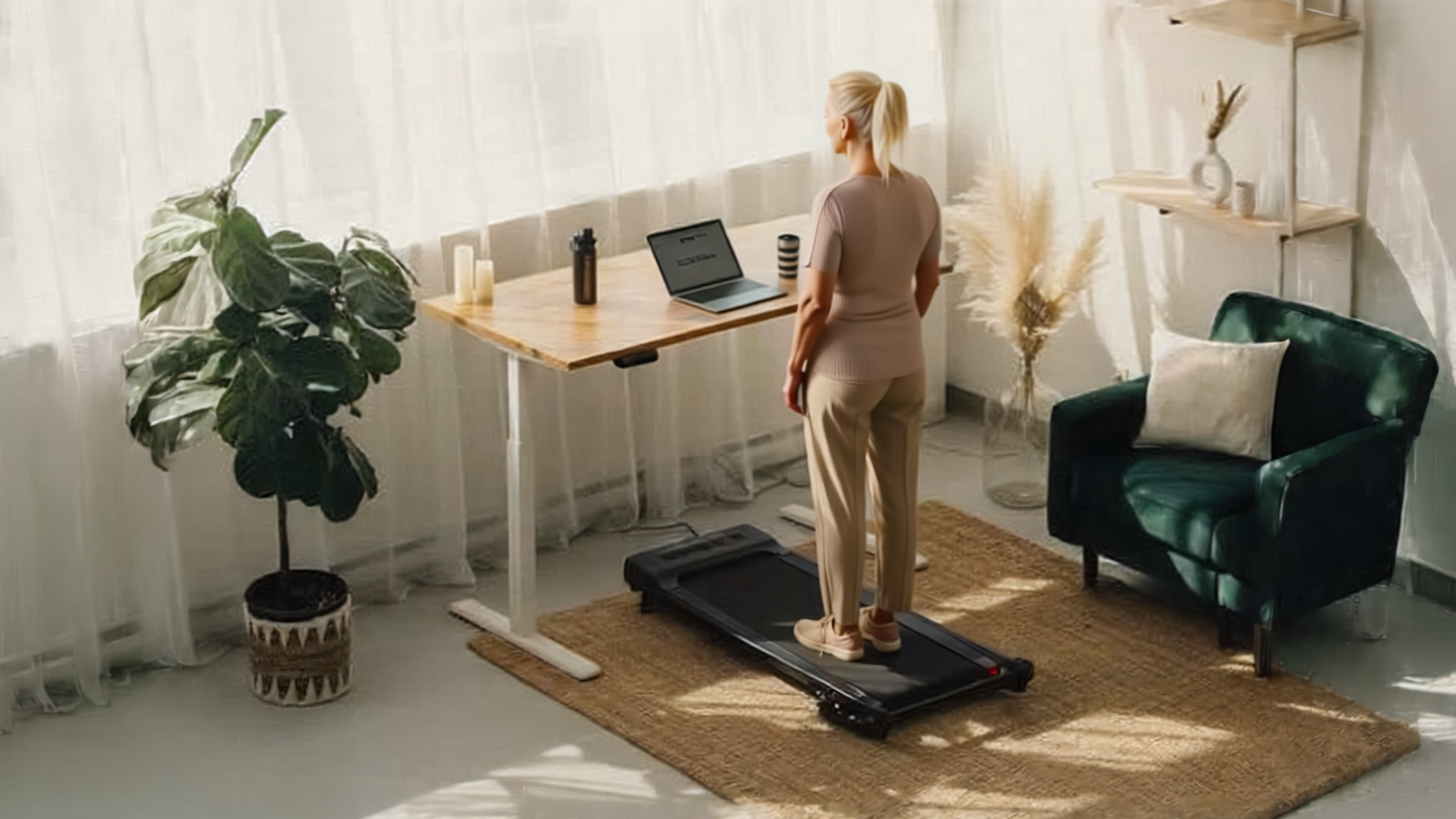
A walking pad is a simple swap: if you’re at home and you’re sitting, you could be walking instead. Same task, same time, more movement. No gym trip, no schedule reshuffled, no hour carved out.
What trips people up is the buying decision. Walking pads look similar online but vary significantly in speed range, noise, incline, and weight capacity. This guide cuts through the options. I’ve reviewed the best walking pads for beginners who want to move more throughout their day — and covered the high-capacity options separately so weight limits don’t become the reason you don’t buy.
If you’re looking for support building real habits around movement — not just a new piece of equipment — Featherweight Fitness offers coaching for women who are done starting over.
What About Weight Capacity?
Before we get to the main picks: one of the most common reasons women don’t buy a walking pad is weight capacity anxiety. They see a limit of 220 or 265 pounds and talk themselves out of it.
That concern is legitimate, and the answer is to buy a pad built for it — not to skip the category. These two are specifically engineered for higher weight capacities, and both are worth knowing about before you decide.
Rayspace Walking Pad — 450 lbs Capacity, 15% Auto Incline
The Rayspace is built on a reinforced steel frame with a triple-layer deck and a 6-layer non-slip belt — engineering that actually matters for heavier users, not just a higher number on the spec sheet. The 15% auto incline with 12 adjustable levels lets you intensify the session when you’re ready, and the 3.5 HP motor handles the load without straining. Speed tops out at 4.0 mph, appropriate for a steady walking pace. Built-in wheels and no-assembly setup mean you’re walking on day one.
- Weight capacity: 450 lbs — reinforced steel frame with triple-layer deck
- Auto incline: 0–15% across 12 levels, one-touch adjustment
- Motor: 3.5 HP, speed range 0.6–4.0 mph
- RGB LED display syncs with speed; Bluetooth speaker included
- No-assembly setup; built-in transport wheels
This is my favorite in this class. It supports a pace up to a 15-minute mile and includes automatic incline. If weight capacity is your deciding factor, start here.
Funmily Walking Pad — 400 lbs Capacity, Desk Workstation Included
The Funmily is the one to get if you want room to progress from walking to a fast walk or slow jog without buying a second machine. The 7.5 mph ceiling gives you that runway. The removable, height-adjustable desk workstation is a practical bonus if you don’t already have a standing desk setup — it attaches cleanly and folds away when you don’t need it. Adjustable handrails provide stability when you push the pace. At 60 lbs, it’s heavier than some, but that weight contributes to stability at higher capacities.
- Weight capacity: 400 lbs — alloy steel frame
- Max speed: 7.5 mph — room to progress from walking to a slow jog
- Incline: up to 15% for added calorie burn
- Removable, height-adjustable desk workstation
- Adjustable handrails fold away for arm-swing freedom
- Three control options: handrail buttons, touch panel, remote
A 7.5 mph ceiling means the machine keeps pace with your fitness. If you don’t want to upgrade equipment when your goals do, this is the one.
The Best Walking Pads for Beginners: Top 4 Picks
| Product | Max Speed | Weight Capacity | Best For |
|---|---|---|---|
| Superun Walking Pad with Incline | 3.8 mph | 300 lbs | Just getting started |
| Rhythm Fun Treadmill with Handle Bar | 5.0 mph | 300 lbs | Building speed over time |
| Walkingpad C2 Foldable | 4.0 mph | 220 lbs | Tight storage space |
| Hccsport 3-in-1 with Desk | 8.0 mph | 300 lbs | Walking now, running later |
Superun Walking Pad with 6% Incline
This is the best overall walking pad for someone who just wants to get started. The Superun weighs 35 lbs, rolls on built-in wheels, and stores flat under a couch, bed, or standing desk without a fight. The 6% incline is a genuine advantage in this class — most compact walking pads are flat — and the 2.5 HP motor keeps noise under 45 dB, quiet enough to use on calls. Speed range is 0.6 to 3.8 mph, right for a steady walking pace. The PitPat app tracks steps, distance, calories, heart rate, and time if you want it, or you ignore it and just walk.
- Weight capacity: 300 lbs on an alloy steel chassis
- Incline: 6% — roughly doubles calorie burn compared to flat walking
- Motor: 2.5 HP, under 45 dB during operation
- Built-in wheels; folds flat at 35 lbs for easy storage
- Speed range: 0.6–3.8 mph
- PitPat app connectivity; remote control; LED display
This is the best walking pad for most beginners. It’s lightweight and it does exactly what you need it to do — perfect for someone who just wants a moderate-paced walk.
Rhythm Fun Treadmill with Handle Bar
The Rhythm Fun has two things the Superun doesn’t: a handle bar and a 5 mph max speed. The handle is more useful than it sounds — not because you’ll need it during normal walking, but because having something to grab when you adjust your pace or footing makes the machine feel safer for someone who isn’t used to moving while doing other things. The 5 mph ceiling matters when you’re ready to transition from a moderate walk to something faster. Manual incline up to 13% gives you another variable to work with as your fitness builds.
- Max speed: 5.0 mph across walking and running modes
- Handle bar for stability during speed changes
- Weight capacity: 300 lbs on a steel frame
- Manual incline up to 13% for progressive challenge
- Folds to 5 inches high at 43 lbs for under-couch storage
- Ypoofit app connectivity; phone holder included
An excellent choice for someone who wants to walk now and transition to a fast walk or slow jog over time — especially if you want something to hold on to while you find your footing.
Walkingpad C2 Foldable
The Walkingpad C2 is the most storage-friendly option in this group. It folds 180° flat and collapses to 5.4 inches high — small enough to slide under a standard bed or behind a door. The aluminum frame keeps it manageable at 55 lbs despite the longer deck (56.9″), and the clean design comes in white if that matters for your space. Speed tops out at 4.0 mph, which covers a comfortable walking pace. No assembly required; Bluetooth connectivity included.
- Folding design: 180° fold to 5.4″ storage height
- Deck length: 56.9″ — longer than most walking pads in this class
- Aluminum frame — 55 lbs with built-in transport wheels
- Speed range: 1.0–4.0 mph; Bluetooth connectivity
- Weight capacity: 220 lbs
- No-assembly setup; remote control included
I love how easily this one tucks away — it’s the only pad in this guide that genuinely disappears into a small space. Points off for the weight capacity; at 220 lbs, it’s the lowest limit in this guide. If storage is your priority and the capacity works for you, it’s worth it.
Hccsport 3-in-1 Walking Pad with Desk
The Hccsport is the most versatile machine in this group. It goes up to 8 mph, includes a removable desktop, handles a 6% incline, and comes with 12 preset programs. The 8 mph ceiling and the 85 lb frame push it outside pure walking pad territory. It’s a compact treadmill that happens to fold flat. If your goal is strictly walking, the Superun or Rhythm Fun are more practical. If you want to run without buying a full treadmill, the Hccsport does it.
- Max speed: 8.0 mph — functions as a full walking and running machine
- Removable desktop workstation for laptop or screen
- Weight capacity: 300 lbs on an alloy steel frame
- Motor: 3.5 HP with 6% incline and 12 programs
- Deck: 42.5″ L × 16.5″ W; folds to 6″ height
- Bluetooth connectivity; built-in speaker; wristband remote
Being able to run up to 8 mph without buying a full treadmill is exceptional. Know going in that it’s heavier and more involved than the others.
Which One Is Right for You?
Just want to start moving — Superun. Want a handle and room to build speed over time — Rhythm Fun. Storage is everything — Walkingpad C2, if the capacity works for you. Want to walk now and run later without a second machine — Hccsport. Weight capacity is the deciding factor — Rayspace to walk, Funmily if you want to progress to running.
Set it up wherever you spend time sitting. Any of these adds thousands of steps to your day, and that’s the point.
Ready to build a routine around it? Featherweight Fitness works with women who are done starting over and ready to build something that lasts.
Frequently Asked Questions
How do I choose the right walking pad for beginners?
Start with three variables: speed range, noise level, and weight capacity. Most beginners don’t need a high speed ceiling — 3.8 to 5 mph covers everything for walking. Noise matters if you’re on calls or in a shared space. Beyond that, look at incline if you want more calorie burn, and storage footprint if space is tight. Match the machine to how you’ll actually use it.
What weight capacity do I need for a walking pad?
Standard walking pads typically support 220 to 300 pounds. If you’re near those limits, go higher — you want headroom, not just clearance. High-capacity options support 400 to 450 pounds and are built with reinforced frames specifically for that load. Weight capacity affects stability and long-term durability, not just safety. Don’t buy to the edge of the limit.
What is the difference between a walking pad and a treadmill?
A treadmill is a full exercise machine — large, heavy, built for running, and designed to stay in one place. A walking pad is compact, low-profile, and built for slow steady walking while you do something else. Most don’t have handrails. They’re designed for movement layered on top of daily life, not dedicated workout sessions. If running is the goal, look for a walking pad with a higher speed ceiling.
Keep Exploring
- Best Foam Roller for Recovery & Mobility: If you’re adding daily movement, recovery matters. Start here.
- 6-Week Beginner Walking Plan: A structured walking plan to pair with your new pad.
- Walking Pads Benefits Guide: Still on the fence about whether a walking pad is worth it? Start here.